

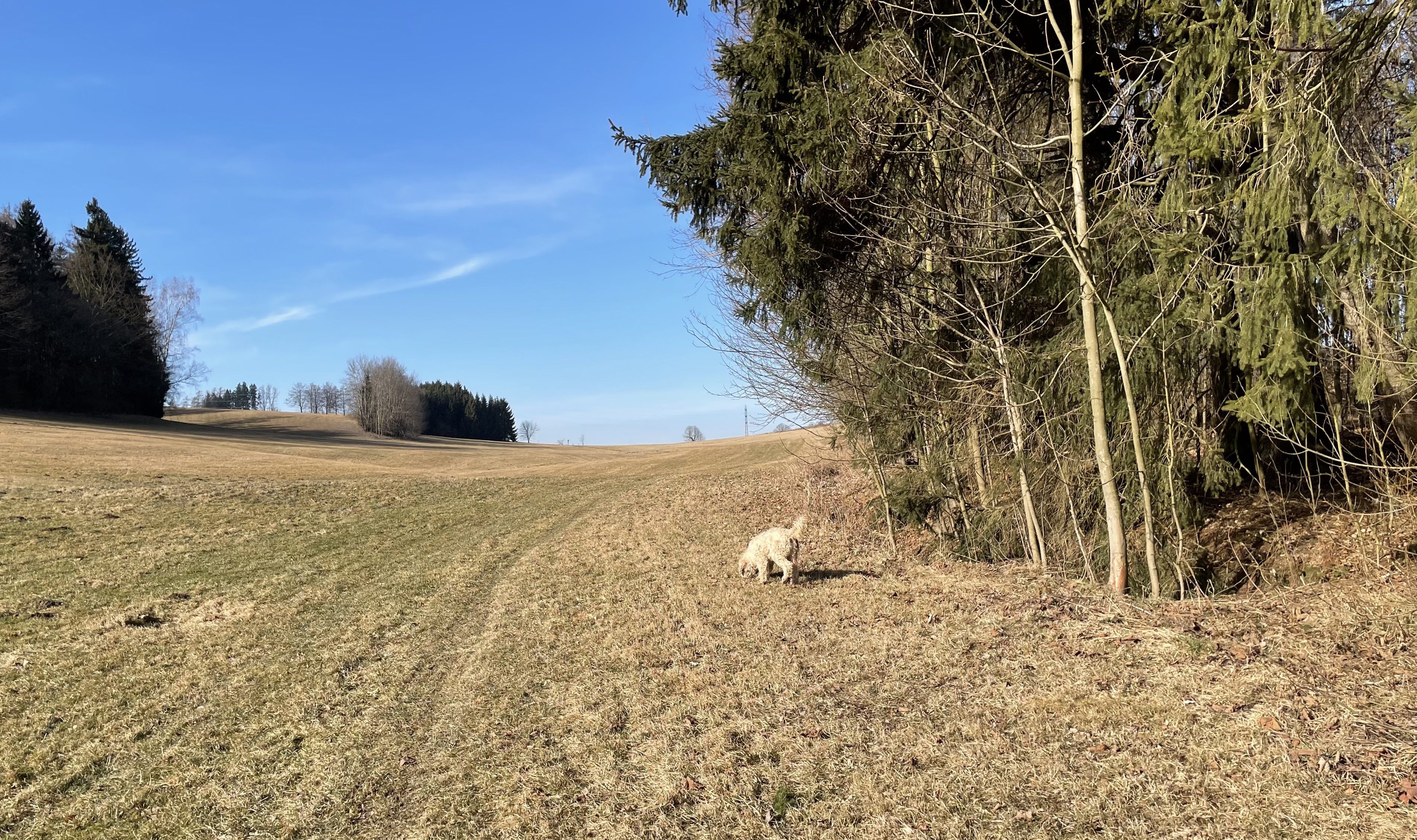
On Boxing Day, with what seemed like a cynical reaction to a grim Christmas, my dog Fiddo threw up. However, by midnight, it was clear that this was more than crude satire and an upset stomach, so we set out beneath the gathering snow clouds and drove to the 24-hour vet clinic. Scans and blood samples revealed that Fiddo had pancreatitis, brought on by our foolish delight in feeding him scraps of often-fatty food, including Christmas dinner leftovers.
After five days, a cocktail of drugs, and an eye-watering vet’s bill, Fiddo returned home, having won the flip-of-the-coin verdict that had given him a 50-50 chance of survival. His diet is now restricted, but, mercifully, the dog walks are not. I had almost killed him, and now he was going to repay me by doing what he has always done – saving my life.
This may sound melodramatic, especially to anyone who doesn’t live with dogs, but it would be impossible to exaggerate the importance of the dog walk to dog owners. It’s my daily source of three otherwise scarce ingredients – simplicity, exercise, and joy.
When enjoying these benefits, time falls away. This relationship between humans and the domestic dog (Canis lupus familiaris) is one of the most enduring symbioses in the history of life on Earth. The simple pleasure of dog-walking is in some ways the culmination of tens of thousands of years of biological evolution and social upheaval; but, more than that, it is a temporal constant, a state of being that narrows the gap between you and your Neolithic, dog-friendly ancestor. The bond may have begun with survival and utility, but it has always involved companionship and emotional resonance.
This shaggy dog story begins around 32,000 years ago. Genetic evidence suggests that the wolf lineages that gave rise to dogs branched off from the immediate Pleistocene ancestor of the modern Grey wolf (Canis lupus lupus) in northern Eurasia around that time. In other words, our dogs are descended from a wolf species that no longer exists, a remarkable testament to the ancientness of this relationship.
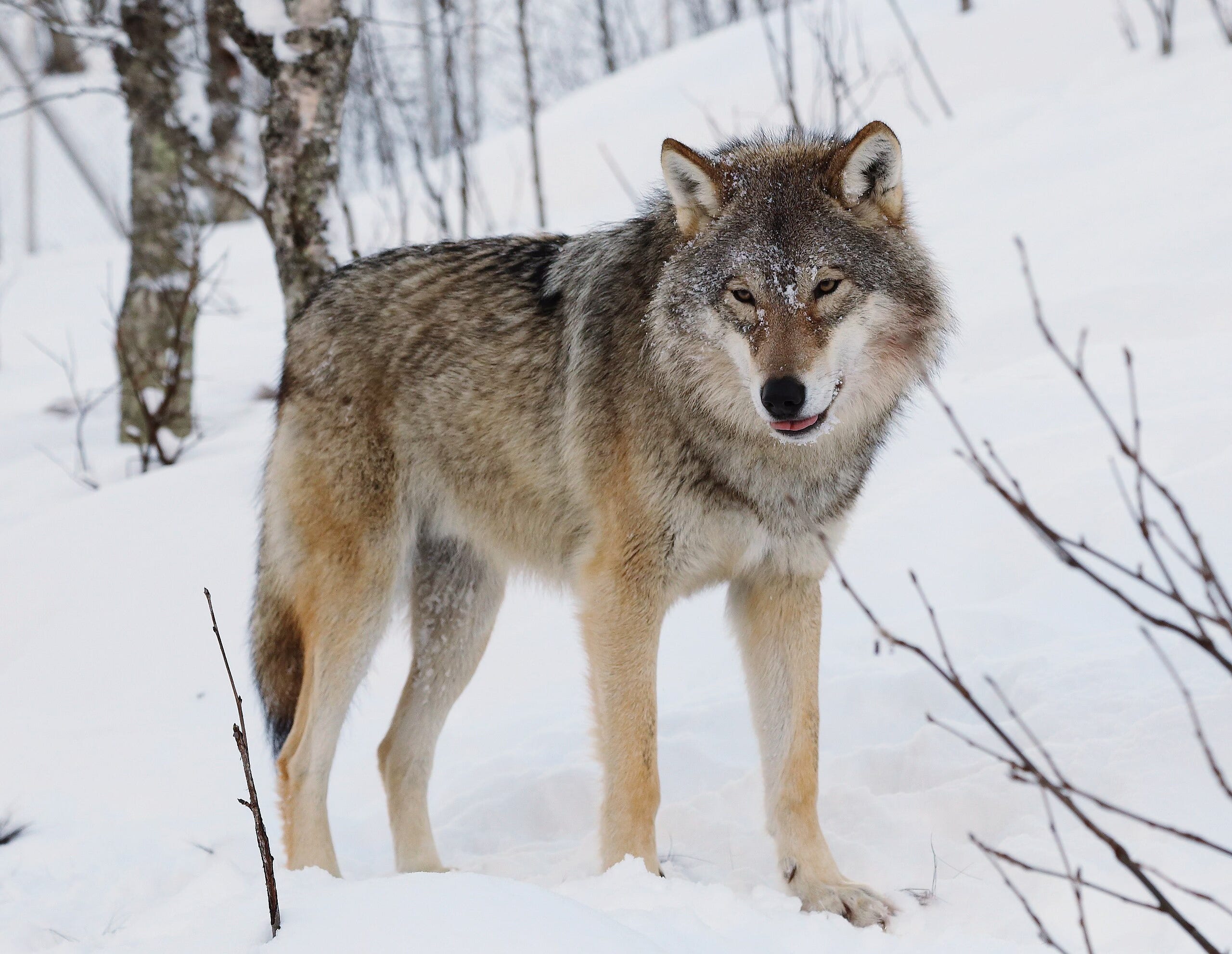
Eurasian wolf at Polar Zoo in Bardu, Norway. This file is licensed under the Creative Commons Attribution-Share Alike 4.0 International license.
The coming together of humans and dogs was probably mutual and gradual rather than a single, discrete event involving strapping a collar and lead to a docile wolf. Our proto-dogs – let’s call them Canis lupus sub-familiaris – provided early warning woofs against predators and assisted in tracking wounded prey, creating a symbiotic loop in which humans provided food and safety while dogs provided sensory enhancement and protection.
As humans transitioned from nomadic lifestyles to settled agricultural communities around 10,000 years ago, intentional, selective dog breeding began – a rudimentary form of genetic engineering that accentuated specific traits to fulfil different roles. By the beginning of the Bronze Age, around 4,500 BCE, distinct dog types had emerged for purposes ranging from tracking and hunting to guarding and herding.
During this long epoch of human-canine partnership, even though an affectionate bond between the two species must have existed, the concept of dog-walking for exercise was redundant, as all dogs were working animals, and movement was synonymous with labour. These hounds were typically kept in kennels or outdoors, and their value was measured by their productivity rather than their presence in the home and cuddliness on the sofa. It was only with the emergence of the non-productive house dog that the need for dog-walking arose.
The triumph of the house dog
Dogs bred primarily for companionship, docility, and a largely indoor lifestyle have appeared several times in human history, typically in wealthy societies that could afford to keep animals as freeloaders rather than slaves.
The forerunners of lap-breeds such as the Pekingese and the Shih Tzu were developed at China’s Imperial Palace 2,000+ years ago. The Pekingese, according to legend, was created when Buddha shrank a lion down to dog size. Such mini breeds were known as “sleeve dogs” because they were small enough to be carried within the capacious sleeves of imperial robes. In Japan, a similar pattern emerged during the Heian period (794–1185 CE), with the development of the Japanese Spaniel (aka Chin).
In the West, the Romans were among the first to keep dogs for companionship and as canine hot-water bottles. These small breeds became known as Spaniel Gentle or Toy/Comforter Spaniels amongst the aristocracy in Medieval Britain, and they were commonly kept by noblewomen as lap warmers and flea-magnets (i.e., keeping the fleas on the dogs and off the humans). However, the majority of medieval dogs were still working animals, and “walkies” was a task delegated to dog-boys – dedicated servants who lived with the hounds and kept them suitably exercised for the working life. The lapdogs would enjoy a potter around posh gardens, but the era of dog-walking was still a few centuries away.
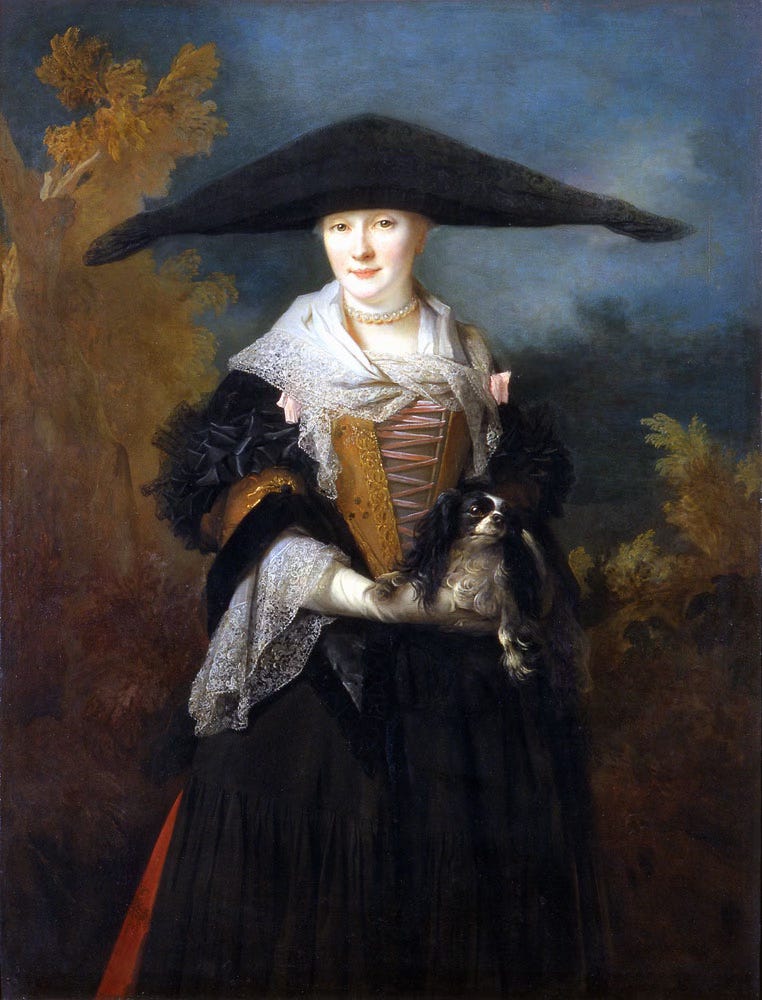
La belle Strasbourgeoise, featuring a long-nosed King Charles Spaniel, by Nicolas de Largillière (1703)
Like most aristocratic fashions, the popularity of the house dog and the social practice of being seen in public with a pooch were driven by royal examples. King Charles II of England (r.1660–1685) was an early trend-setter, and his small spaniels were the ancestors of the Cavalier King Charles Spaniel breed. Folklore maintains that he issued a royal decree allowing his spaniels access to all public places, including the Houses of Parliament. This might not be true, but Charles’ frequent walks with his dogs through the royal parks set a precedent for the pet dog as a visible, public-facing accessory of the elite.
Prior to this canine liberation, dogs had faced tougher times in urban settings, being whipped from town streets and churches as vermin. Payments to local dog-whippers are recorded in many town records, and in York and elsewhere, the 18th of October (St. Luke’s Day) was known as Whip Dog Day, when boys were encouraged to chase and whip all the curs they could find. It was said that a dog had once eaten a consecrated wafer in York Minster and that, as a consequence, the annual punishment was meted out to the entire canine race. In reality, the whip-round was simply an annual dog drive to rid towns of the packs that inevitably congregated there, as indeed they still do in many towns and cities across the world.
Meanwhile, Charles II was not alone in his dogged devotions. William III (r.1689–1702) popularised the Pug (aka Dutch Mastiff), a breed that had become a symbol of the royal house of Orange after Pompey the Pug’s angry woofing had foiled an assassination attempt on the king’s ancestor William the Silent in 1572. The breed has remained popular, with its most famous 18th-century representative being Trump, captured on canvas by his owner William Hogarth, whose paintings reveal that the Pug was a very different beast to the poor brachycephalic breed of today.
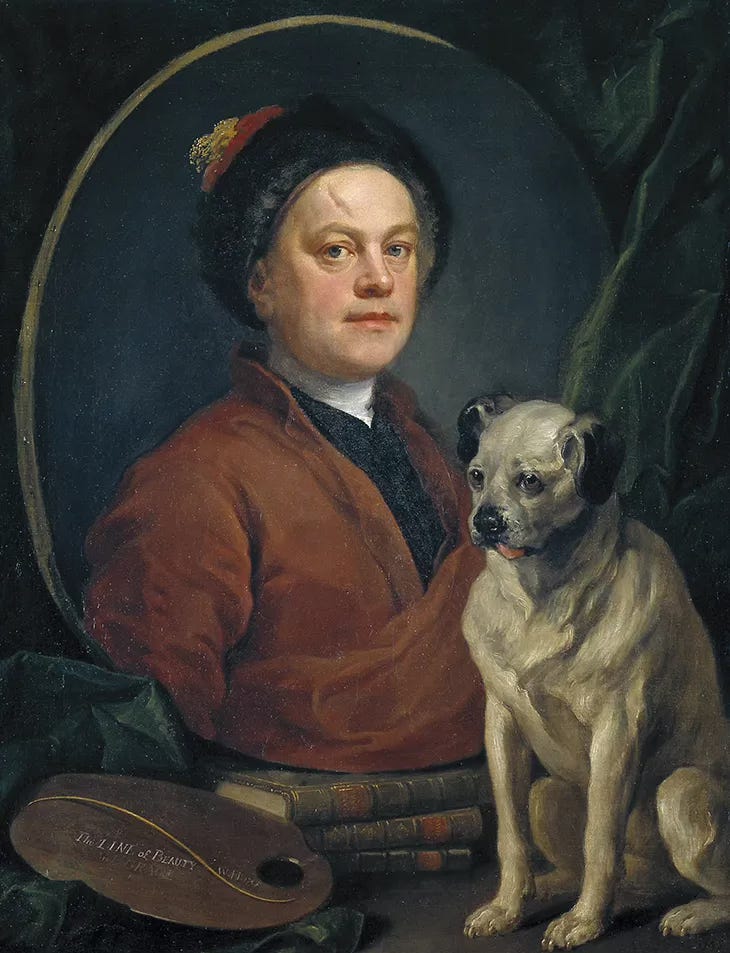
The Painter and his Pug, William Hogarth, 1745
Marie Antoinette (r.1774–92) maintained a deep attachment to a Pug called Mops (which is still the name for the breed in many European countries) and a small Spaniel named Thisbe. The latter stayed at her cell door during her final imprisonment, and folklore maintains that she howled when her mistress was guillotined, only to be killed by a disapproving soldier.
Frederick the Great of Prussia (r.1740–86) was devoted to his Italian Greyhounds. His final wish to be buried in a terrace vault next to his dogs was initially denied by his successor, but in 1991, his remains were moved to the grounds of Sanssouci, where he rests today alongside the headstones of his Greyhounds.
With dogs now fashionable amongst the rich and powerful, early manifestations of dog-walking brought the world a surfeit of decorative leads and collars and an urgent need for poo-bags.
The Victorian dog
If Charles II introduced the dog to the public sphere, it was Queen Victoria (r.1837–1901) who institutionalised them as pan-society household pets and family members. Her love for dogs began in her youth with a Cavalier King Charles Spaniel, Dash, who she washed after returning home from her coronation ceremony in 1838, highlighting the vital role of dogs as de-stressors. Victoria popularised several breeds, including the Dachshund, the Collie, and the Pomeranian. By entering six Pomeranians and a Long-haired Collie into the first Crufts dog show in 1891, she helped transform dog breeding and ownership into a respectable middle-class pursuit. (Her Pomeranians Gena and Fluffy and a Long-haired Collie, Darnley II, all won prizes.)
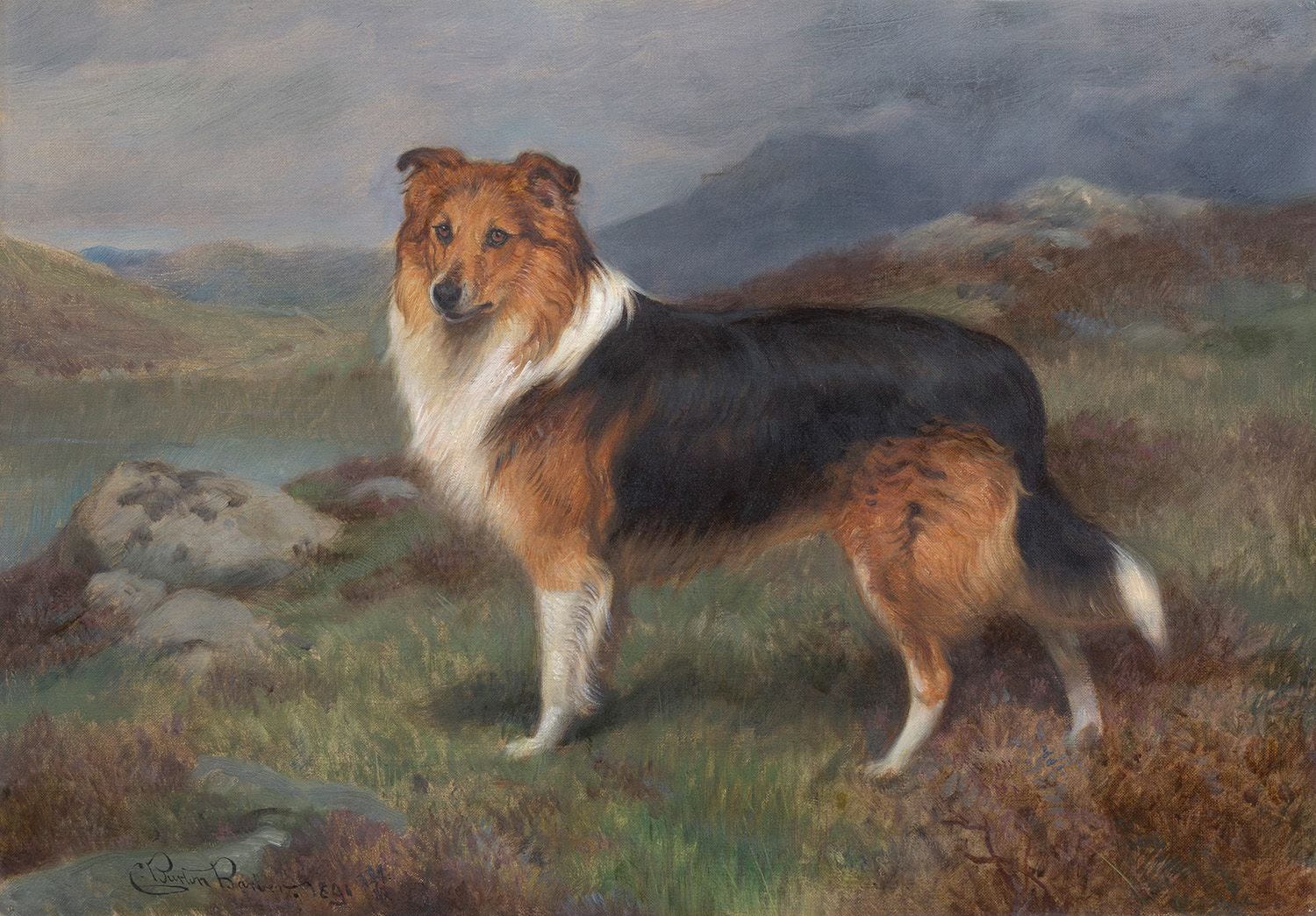
Darnley, 1891, by Charles Burton Barber (1845-94). Royal Collection Trust / © His Majesty King Charles III 2024
It was during this later Victorian era, specifically in London, that the modern pet dog was “invented”. Several converging forces – industrialisation, urbanisation, the burgeoning animal welfare movement, and the Queen Victoria-spearheaded notion of the dog as a beloved family pet rather than a working animal – reset the human/dog template. This shift was accelerated by the Town Police Clauses Act of 1847 and subsequent legislation that banned the use of dogs for pulling carts, first in London in 1840 and then nationwide by 1854. This essentially made thousands of working animals redundant, and the RSPCA – formed in 1824 – became increasingly busy rescuing stray, neglected, and abused animals, a task that, sadly, has continued to accelerate.
So, the idea of having a dog simply as a pet was cemented in Britain by the end of the nineteenth century. The dog-walk became a national occupation, and its symbols were those now-essential accessories, the dog-lead and collar. For the upper classes, the task of walking the family dog was often assigned to servants, while for the middle classes, walking one’s own dog became a standard of responsible ownership. The secret to the widespread phenomenon is one that still resonates with dog owners – the simple, de-stressing enjoyment of being out and about with your beloved pet.
The walk of life
The mid-20th century saw the emergence of the professional dog-walker, a role previously confined to the staff of rich households. Jim Buck is widely credited as the first professional dog walker, launching his service in New York City in 1960. Buck’s business was born from the realisation that the busy professionals of the Upper East Side had the money to keep dogs but lacked the time to exercise them. By the mid-1960s, he was employing dozens of assistants and walking hundreds of dogs a day through Central Park, turning a domestic chore into a lucrative career.
Today, dog walking is a multi-billion-pound global industry, facilitated by digital platforms that connect independent walkers with pet owners. This professionalisation reflects the modern understanding of the walk as a non-negotiable component of owning a dog. Today, for the average dog taking a walk in the streets and parks, the danger does not come from enthusiastic boys wielding whips, but from dog-kidnappers with an eye for expensive breeds.
Studies have shown that dog owners are more likely to meet their recommended physical activity goals, and research from the University of Western Australia suggests that communities with high rates of dog walking have higher levels of interpersonal relationships and trust, as the walk provides frequent opportunities for neighbours to interact and exchange greetings.
The dog walk has been categorised into two distinct types: functional and recreational. The functional walk is often short, prompted by a feeling of guilt for keeping a dog indoors, or simply undertaken to allow the dog to relieve itself. The recreational walk is longer, providing pleasure and stress-relief for the human participant.
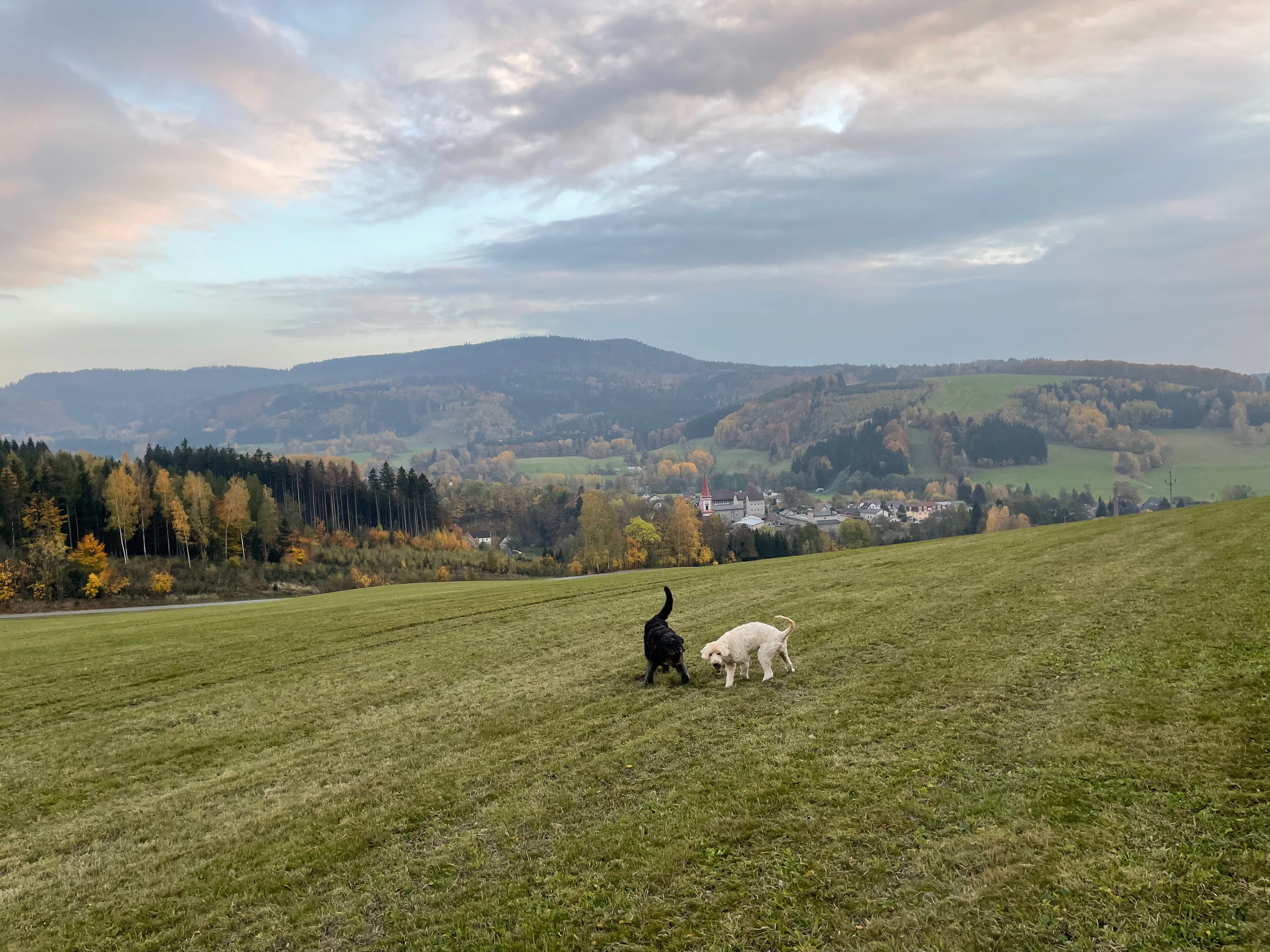
Fiddo and Safi in the Bely-Machov hills
Best friend forever
Such a history is neat and convenient, suggesting that the human-canine relationship underwent seismic shifts over the various epochs. However, the truth is surely far more fluid. The core of the relationship is a two-way affection: dogs love their owners, and most owners love their dogs. Consequently, I imagine that people have always enjoyed taking a stroll over the hill with their canine companion, simply because dogs are great company.
In recent years, my domestic life has travelled to some dark and turbulent places, but my guide through the eye of the storm has been Fiddo. Once we reach the meadows on the edge of the village, the leash is slipped, and he toboggans on his back and sides through the grass – or the snow – and heralds the walk with an orgasmic writhe and a joyful woof, before fleeing like a cannonball towards whatever freedom and olfactory heaven the fields are offering today.
I’m sure thousands of my glum doppelgangers have padded through thousands of years of history with their incarnations of Fiddo at their side and have felt their troubles pull back into the past and future as the dog seizes the moment and leads its human companion into the present, into mindfulness, flow-state, grounding.
And that’s why saving him from Christmas-dinner poisoning was the most important action I have taken in the last decade.
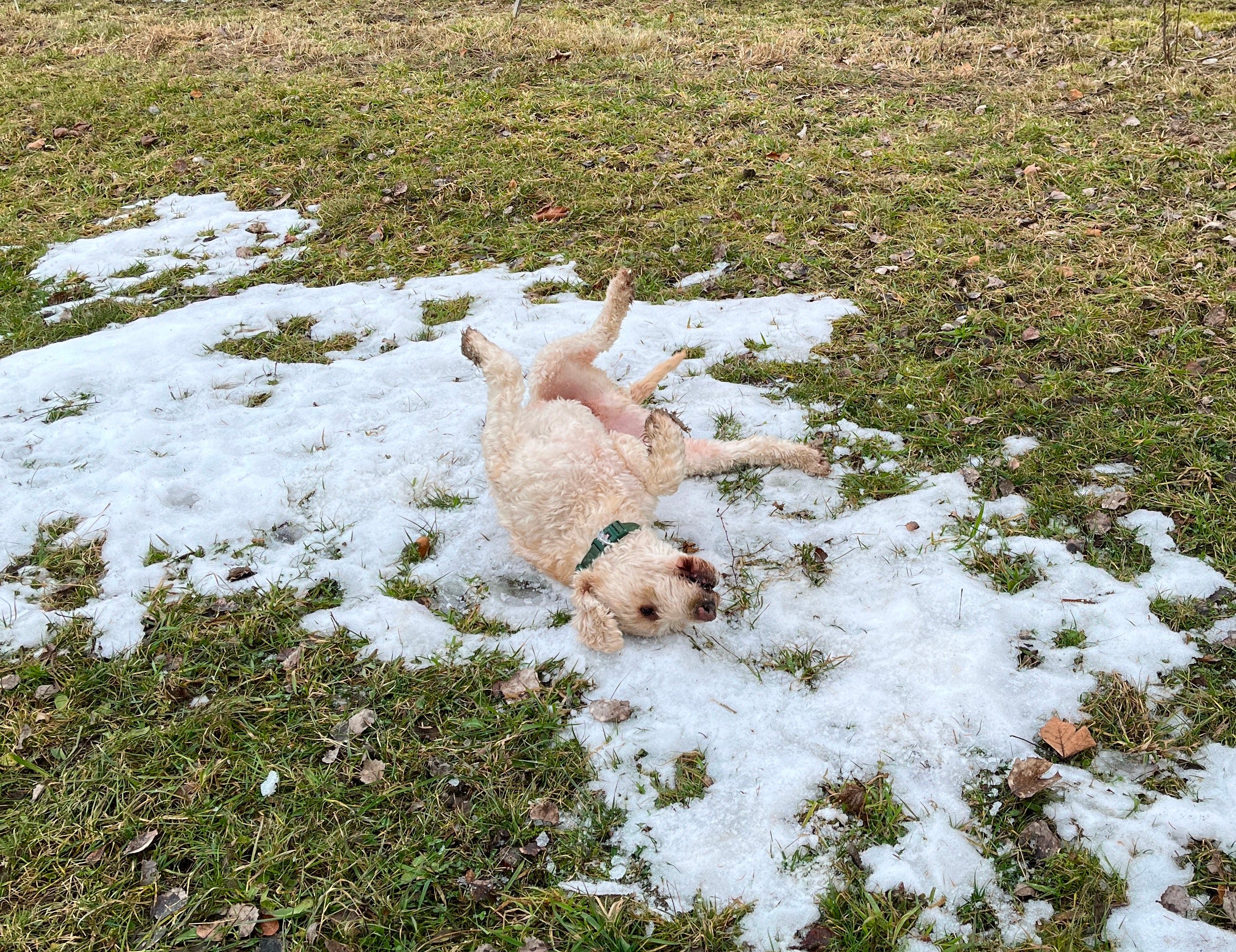
Fiddo writhing in the meadow
Sources
https://www.britannica.com/animal/dog
https://en.wikipedia.org/wiki/Domestication_of_the_dog#Europe
https://en.wikipedia.org/wiki/Lap_dog
https://www.youluckydogct.com/jim-buck-the-first-professional-dog-walker/
https://www.rct.uk/collection/stories/royal-pets
https://research-repository.uwa.edu.au/en/publications/dog-walking/
Quentin Cooper and Paul Sullivan, Maypoles, Martyrs and Mayhem (1994)
If you’ve enjoyed this article, please share it with your fellow readers via this button:
If you haven’t already, you could support my writing by subscribing, with free or paying options:
And as the sound of a boiling kettle is music to my ears, you might consider buying me a one-off or regular cuppa…
Great piece. I am fascinated by our evolving relationship with dogs - I wrote a book about it :) - but I love the focus in this piece about their importance to our mental and physical well-being. I relate to all you say here. They are also a great reminder to us wordy bods that there are many layers of communication beyond words. Right - off to take my two for a walk now - in silence.
Fantastic myth-busting article!
I really enjoyed reading and learning from it.
I wondered whether you might consider moving away from the term “domestication” when referring to dogs.
As you pointed out later in the piece, dogs were not domesticated in the traditional sense of deliberate human control and selective breeding.
Rather, they appear to have co-evolved alongside humans, beginning with wolves that scavenged near human settlements and gradually transitioning into proto-dogs, village dogs, and eventually the genetically distinct domestic dogs we know today. This process occurred over tens of thousands of years, largely driven by natural and social selection rather than intentional human design.
It’s also worth remembering that, until relatively recently, free-roaming dogs were a normal and accepted part of human settlements. The concepts of the “stray dog” and organised dog catching only invented in the late 19th and early 20th centuries in efforts to regulate and eradicate free-living dog populations. Before that, village, town, and city dogs, both owned and unowned, existed openly as part of the social and ecological fabric of human communities. In many parts of the world, this remained common well into the late 20th century. Its odd they way we forget such major social change so quickly dont you think?
Sorry for rambling on keep up the good work.