

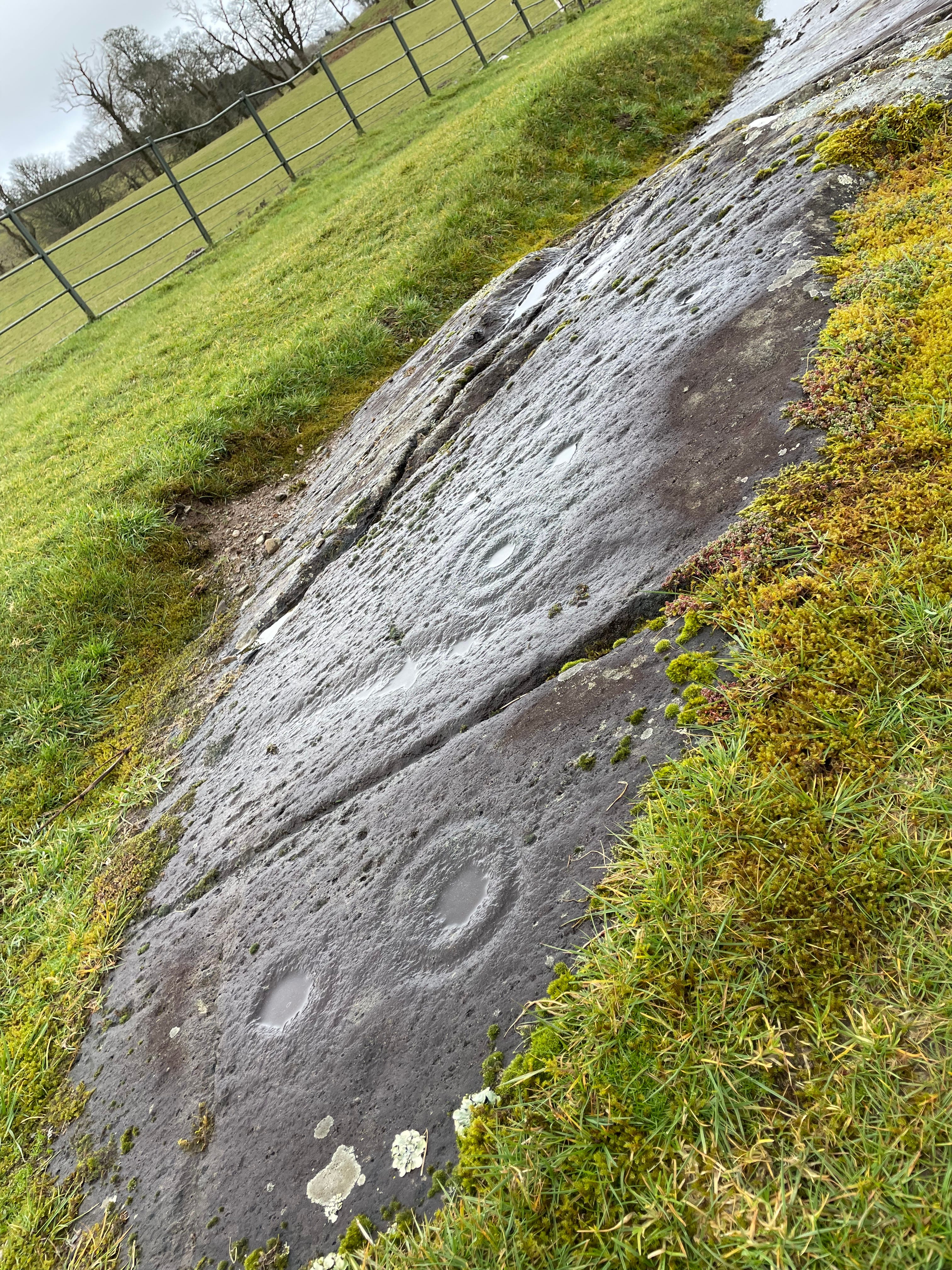
Let’s make up some traditions… decorated stone at Kilmartin, Argyll.
Ever-malleable and endlessly reinvented (or endlessly reinventing the same tropes and motifs), folklore has adapted seamlessly to the digital age. The legend of the Grindleford Beast, which I was researching for my forthcoming book on Derbyshire folklore, is a great example of how folklore-on-the-digital-grapevine works. It originated as on online hoax percolated through social media groups, involving a grotesque, silent creature lurking in Grindleford Forest, and the story spread quickly, with local residents adding mock sightings and digitally created images. The Beast has now outgrown the original joke, with some people believing in its existence or using stories of the creature to spook visitors.
With a similarly internet-based origin story, many places, such as the Silk Mill in Derby, have attracted new ghost narratives, shaped by online discussions and crowd-sourced storytelling. Former industrial sites have an eerie, echoey emptiness that lends itself perfectly to ghost stories. There are, for example, rumours of crying children in many former cotton mills, places where child labour would have produced sufficient misery to fuel a disgruntled ghost or two.
